Attacks on the civilian population and civilian objects: aspects of qualification in the practice of the International Criminal Court
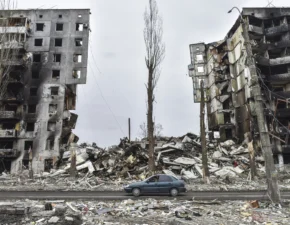
Since the first moments of the full-scale invasion on February 24, 2022, Russia has carried out numerous attacks on the civilian population and civilian objects, grossly violating the norms of international humanitarian law and committing other war crimes. Thus, as early as March 1, 2022, the European Court of Human Rights obliged the Russian government to refrain from military attacks on civilians and civilian objects, including residential premises, ambulance vehicles, and other civilian objects that are specially protected, such as schools and hospitals, and immediately ensure the safety of medical facilities, personnel, and emergency vehicles in an area under attack or surrounded by Russian forces.
The facts of attacks on civilians are recorded by various international organizations. Thus, the International Commission of Inquiry on Ukraine found numerous cases when the Armed Forces of the Russian Federation shot at civilians who were trying to escape to a safe place and get food or other basic necessities, as a result of which the victims were killed or injured. In the documented cases, the victims were dressed in civilian clothes, traveled in civilian cars, and were not armed. Most of these incidents took place during the daytime, from which it follows that the attackers must have understood that they were facing persons who looked like civilians. Under international humanitarian law, when there is any such doubt, a person must be considered a civilian. Attacks deliberately directed against civilians are war crimes.
The expert mission within the framework of the OSCE Moscow Mechanism received a lot of information about cases of attacks on civilians who were simply walking or riding bicycles in public places, traveling in cars or trains, four of which were committed against journalists, which constitute cases of deliberate attacks on civilians (which is a war crime). The mission also found that after the withdrawal of Russian troops from Bucha, north of Kyiv, in late March 2022, videos emerged showing at least nine dead bodies lying on the street in a residential area of the city. On April 15, 2022, the Kyiv Region Police Department reported that after the withdrawal of Russia, 900 bodies of civilians were found in the region, more than 350 of them in Bucha. According to the police, the vast majority – almost 95 percent – were “simply executed.”
The UN Independent International Commission of Inquiry on Ukraine also investigated multiple attacks on energy facilities in Ukraine launched by Russian armed forces on October 10, 2022. Critically important energy infrastructure facilities in Ukraine were attacked from the first stages of the invasion. However, when President Putin declared that “at the proposal of the Ministry of Defense and in conformance with the plan of the General Staff of Russia, a massive strike was carried out with high-precision long-range weapons from the air, sea, and land on the Ukrainian energy, military and communication facilities”, the nature of these attacks has changed significantly in several aspects. Disruption of electrical substations, power plants, and other facilities that produce energy and heat necessary for the survival of the population caused significant damage to civilians. Whole regions and millions of people were periodically left without electricity or heating, especially in winter, and consequently with limited access to water, sanitation, food, health care, and education. Despite public information about the damage caused to the civilian population after the first few attacks, the Russian armed forces continued to attack energy infrastructure facilities. The commission concluded that these attacks by the Russian armed forces were disproportionate and constituted a war crime of excessive accidental death, injury, or damage. It also found that the attacks were widespread and systematic and could constitute a crime against humanity consisting of other inhumane acts.
Deliberately directing attacks against the civilian population as such or against individual civilians not directly participating in hostilities, or deliberately directing attacks against civilian objects, i.e. objects that are not military objectives, in accordance with Article 8(2)(b) of the Rome Statute of the International Criminal Court (Rome Statute) are recognized as war crimes. In the practice of the ICC, the following elements must be established to qualify this crime:
- The perpetrator committed an attack. The Rome Statute does not define the concept of ‘attack’. According to the ICC, the term “attack” should be understood as “an act of violence against an adversary, either during an attack or during defense.” In addition, the ICC considers that the crime of attack on civilians prohibits certain behaviors and that the material element is established where the attack is initiated, and its object is the civilian population as such or individual civilians who do not take a direct part in hostilities; no attack result is required.
- The object of the attack was the civilian population as such, or individual civilians not directly participating in hostilities, or civilian objects, that is, objects that are not military targets. The Rome Statute prohibits direct attacks on civilians. The ICC reminds that this prohibition cannot under any circumstances be balanced by military necessity. Thus, the prohibition of direct attack on the civilian population is absolute and applies to both international and non-international armed conflicts. The ICC defines a ‘civilian’ as any person who is not a member of either state armed forces or non-state military formations. The term ‘civilian population’ means ‘civilians as a group’.
- The perpetrator deliberately chose the civilian population as the target of the attack, or individual civilians not directly participating in hostilities, or civilian objects, that is, objects that are not military targets. The ICC considers that this crime can be established even if the military operation was also aimed at a legitimate military object. However, it is important to establish that the primary target of the attack was the civilian population or individual civilians. Thus, situations in which an attack is directed at a military object and civilians are accidentally injured do not fall under the elements of this crime. It should be noted that indiscriminate attacks may qualify as deliberate attacks on the civilian population or individual civilians, especially if the harm caused to civilians is so great that the ICC believes that the perpetrator had civilian targets in mind. The indiscriminate use of weapons may, among other things, indicate that the attack was directed at the civilian population or individual civilians. According to the ICC, the presence of such intent can be evidenced by various factors that establish that civilians, who did not take part in hostilities, were the object of the attack, such as the means and methods used during the attack, the number and status of the victim, discriminatory nature of the assault or, as the case may be, the nature of the act constituting the assault.
4. The action took place in the context of an international armed conflict and was related to it.
- The executor was aware of the actual circumstances that indicated the existence of an armed conflict. That is, to establish the mental element of this crime, the criminal must: intentionally direct the attack; predict that the target of the attack will be the civilian population or individual civilians; to be aware of the civilian nature of the population or civilians who do not participate in military operations; to be aware of the actual circumstances that indicate the existence of an armed conflict.
This can be demonstrated by the example of the decision made by the ICC in the case Prosecutor v. Germaine Katanga. In this case, the ICC established that on February 24, 2003, two militia groups – the Patriotic Resistance Front of Ituri (Ngiti armed group) and the Nationalist and Internationalist Front (Lendu armed group) attacked Bogoro to oust or destroy the camp of the Union of Congolese Patriots and the civilian the population of Hema. The attack on the village took place early in the morning when it was still dark and the villagers were still sleeping at home, and the attackers came from all sides, making escape very difficult. During the attack on Bogoro, combatants chased, injured, or killed villagers, who did not take direct part in the hostilities, when they fled and when they were in their homes. Even after the Union of Congolese Patriots withdrew, Lendu and Ngiti fighters continued to harass the Bogoro civilians still hiding in the bush, killing some of them and sexually assaulting several women. The ICC also found that the attackers asked their victims to reveal their ethnicity. All these facts make it possible to establish that on February 24, 2003, the attackers intended to attack the predominantly civilian population of Hema.
Thus, taking into account the time of the attack, means and method used (the surroundings of the village, when its inhabitants were still asleep); using a machete to kill at close range; shooting indiscriminately or directly at the villagers, during or after the fighting, in their houses, when they fled or when they hid; civilian casualties, including 13 children, many women and the elderly, the ICC found beyond a reasonable doubt that on 24 February 2003, Ngiti combatants directly attacked the civilian population of Bogoro, consisting mainly of Hema, who did not directly participate in hostilities, and therefore a war crime was committed – intentional targeting of attacks on the civilian population as such or on individual civilians who do not directly participate in hostilities.
For reference
This publication is made possible by the generous support of the American people through the United States Agency for International Development (USAID) in the framework of the Human Rights in Action Program implemented by the Ukrainian Helsinki Human Rights Union (helsinki.org.ua).
Opinions, conclusions, and recommendations presented in this publication do not necessarily reflect the views of USAID, the United States Government, or UHHRU. The contents are the responsibility of the authors and ECHR.
USAID is the world’s premier international development agency and a catalytic actor driving development results. USAID’s work demonstrates American generosity, promotes a path to recipient self-reliance and resilience, and advances U.S. national security and economic prosperity. USAID has partnered with Ukraine since 1992, providing more than $3 billion in assistance. USAID’s current strategic priorities include strengthening democracy and good governance, promoting economic development and energy security, improving healthcare systems, and mitigating the effects of the conflict in the East. For additional information about USAID in Ukraine, please call USAID’s Development Outreach and the Communications Office at +38 (044) 521-5753. You may also visit our website: http://www.usaid.gov/ukraine or our Facebook page at https://www.facebook.com/USAIDUkraine.