Five questions about the International Military Tribunal as a mechanism for the prosecution of international crimes
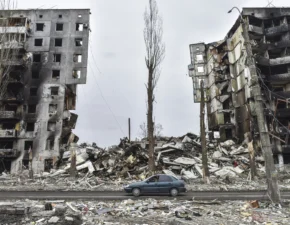
 Unprovoked armed aggression of the Russian Federation against Ukraine from the very beginning is accompanied by numerous crimes committed by both the highest military and political leadership of the Russian Federation, as well as by privates and officership of its armed forces, and by mercenaries of the PMC Wagner and other proxy groups widely used by Russia in this war. The necessity to ensure the inevitability of bringing to responsibility for the committed crimes has prompted the international community to search for legal mechanisms to punish the perpetrators, the most effective and probably the most debatable of which is an international tribunal. However, it is difficult for the average person to understand the legal nature of the international tribunal and the legal intricacies of its activities. Let us try to explain this with the help of five simple questions.
What is it?
An International Military Tribunal is a judicial body established by an international treaty to investigate and prosecute persons guilty of international crimes, i.e. socially dangerous intentional attacks on the vital interests of the international community, international peace, and security. In the most general terms, the essence of international military tribunals can be described by the following features.
Firstly, such a tribunal is a “judicial body”, i.e., it has jurisdiction to investigate and prosecute, conduct judicial proceedings, and impose punishment if a person is found guilty of an international crime. The status of a judicial body means that in its activities the tribunal is guided by the general principles of criminal law, including the following: a person cannot be held legally liable twice for the same offense; a person is subject to criminal liability only for an act that is recognized as a crime at the time of its commission; a person found guilty may be imposed a sentence established under an international treaty; presumption of innocence; ensuring the rights of the accused, etc.
Secondly, such a tribunal is “international,” i.e., it is established and operates not according to the laws of any particular country, but in adherence to international law. The “international” status of the tribunal is necessary to “overcome” the immunity of top state officials from foreign criminal jurisdiction. Immunity means that criminal prosecution of such a person cannot be carried out in accordance with the provisions of national law (for example, Article 6, part 2 of the Criminal Procedure Code of Ukraine). At the same time, immunities related to a person’s official position under national or international law do not prevent international military tribunals from executing their jurisdiction (for example, Article 27, part 2 of the Rome Statute of the International Criminal Court).
Thirdly, such a tribunal is a “military” one. It means that the tribunal’s jurisdiction does not address all crimes, but only those encroaching on international peace and security. For instance, the International Criminal Court has jurisdiction over the following crimes: the crime of genocide; crimes against humanity; war crimes; the crime of aggression.
How did it all begin?
The prohibition of war crimes had been enshrined in the legal systems of many states before World War I, but very few countries prosecuted their own criminals. Therefore, the idea of creating an international judicial body to bring to justice for war crimes dates back to the end of the First World War. Thus, according to the Treaty of Versailles, Germany initiated individual trials in the Supreme Court of Leipzig (Leipzig war crime trials). The Allies filed 45 cases (out of almost 900 listed in the reports of the International Commission in 1919) concerning the treatment of prisoners of war and the wounded, as well as the order to torpedo a British naval hospital. These trials took place in 1921. Six of the twelve trials resulted in acquittals and six got a symbolic punishment. It was due to the lack of fair punishment for World War I crimes that probably resulted in war crimes recurrence in the future.
This idea was revisited at the end of World War II when the coalition of victorious powers signed a treaty establishing the International Military Tribunal (Nuremberg Tribunal) and later the International Military Tribunal for the Far East (Tokyo Tribunal).
After the Cold War, the international community was again confronted with atrocities in Yugoslavia and Rwanda. In response, the UN Security Council has established two tribunals: The International Criminal Tribunal for the Former Yugoslavia and the International Criminal Tribunal for Rwanda. These two tribunals would last for twenty years and cost billions of dollars, but the justice they restored for many human lives was well worth the cost and effort. It was the effectiveness of these tribunals that allowed the idea of a permanent international tribunal to develop and be realized in the creation of the International Criminal Court.
What are they?
Over more than a century of history, the number of international military tribunals allows us to distinguish their types. The only permanent international criminal justice body is the International Criminal Court. All other international military tribunals were specialized (ad hoc), i.e., created to investigate and punish international crimes committed during a particular war, on a specific territory, and within a specific time frame.
In addition to international military tribunals established by international law, there are also so-called “hybrid” or mixed tribunals. Its peculiarity is that it is integrated into the national justice system with international elements (involvement of foreign judges, location in another country, etc.), and its jurisdiction is based on national criminal law. Despite the advantages that allow saving time and resources, hybrid tribunals have an obvious disadvantage: they cannot overcome the immunity of top state officials. Moreover, the creation of “hybrid” tribunals should not contradict the national legislation. In particular, Ukraine does not allow the establishment of uncommon and special courts (Article 125, part 6 of the Constitution of Ukraine).
How are they established?
An international military tribunal is usually established based on an international treaty. Such a treaty may be concluded by a coalition of states, which is how the Nuremberg and Tokyo tribunals were created. The International Criminal Court was established in the same way, with a peculiarity that the decision to form it was made at the Diplomatic Conference of Plenipotentiaries of States under the auspices of the United Nations, which was convened by the 52nd session of the UN General Assembly.
International military tribunals may also be established by a decision of the UN Security Council according to Chapter VII “Action with Respect to Threats to the Peace, Breaches of the Peace, and Acts of Aggression” of the UN Charter. In particular, the International Criminal Tribunal for the Former Yugoslavia was established by the UN Security Council Resolution # 827 of May 25, 1993, and the International Criminal Tribunal for Rwanda was established by the UN Security Council Resolution # 977 of February 22, 1995.
Moreover, an international military tribunal may be established upon the recommendation of the UN General Assembly. Thus, the UN General Assembly in its Resolution # 57/228 of December 18, 2002, approved the establishment of the Extraordinary Chambers in the Courts of Cambodia. Further cooperation between the United Nations and the Royal Government of Cambodia was regulated by a separate agreement of June 6, 2003, on the prosecution of crimes committed under the criminal law of Cambodia during the period of Democratic Kampuchea.
How do they operate?
International military tribunals generally operate based on a charter, except for hybrid tribunals operated under national law. The charter of an international military tribunal must define substantive, temporal, territorial, and subject matter jurisdiction; define the location, structure, and procedure or the appointment of senior judges and staff, and working languages; provide for rules of procedure and evidence, rights of the accused, requirements for a court decision, types of punishment, and the procedure for their imposition, etc.
For reference:
This publication is made possible by the generous support of the American people through the United States Agency for International Development (USAID) in the framework of the Human Rights in Action Program implemented by the Ukrainian Helsinki Human Rights Union (helsinki.org.ua).
Opinions, conclusions, and recommendations presented in this publication do not necessarily reflect the views of USAID, the United States Government, or UHHRU. The contents are the responsibility of the authors and ECHR.
USAID is the world’s premier international development agency and a catalytic actor driving development results. USAID’s work demonstrates American generosity, and promotes a path to recipient self-reliance and resilience, and advances U.S. national security and economic prosperity. USAID has partnered with Ukraine since 1992, providing more than $3 billion in assistance. USAID’s current strategic priorities include strengthening democracy and good governance, promoting economic development and energy security, improving healthcare systems, and mitigating the effects of the conflict in the East. For additional information about USAID in Ukraine, please call USAID’s Development Outreach and Communications Office at +38 (044) 521-5753. You may also visit our website: http://www.usaid.gov/ukraine or our Facebook page at https://www.facebook.com/USAIDUkraine